
What Type Of Guns Do Armed Security Guards Rely On For Protection?
Questions about what guns armed security use are common among businesses, event organizers, and property managers seeking effective protection without unnecessary risk. Firearm selection in professional security is shaped by law, mission scope, environment, and rigorous training standards rather than personal preference.
This article explains the common firearm categories relied upon by armed security guards, why those options are chosen, and how legal and operational factors influence responsible use.
How Legal Frameworks Shape Firearm Choices
Before discussing specific firearms, it is important to understand the legal landscape. Armed security guards operate under state and local regulations that determine what types of firearms they may carry, how they must be licensed, and the training required. These rules vary by jurisdiction and often specify caliber limits, magazine capacity, and approved carry methods.
Professional security companies follow strict compliance standards. Guards are trained to carry only firearms that are lawful for their assignment and location. This makes room for accountability, public safety, and consistent operational readiness. Legal compliance is also a key reason security professionals rely on standardized firearm platforms that are widely accepted by regulators and insurers.
The Role of Mission and Environment
Firearm selection depends heavily on mission type. A guard assigned to a corporate office faces different risks than one protecting a crowded public venue. Environmental factors such as lighting, crowd density, and potential escape routes influence what equipment is appropriate.
For example, an event security guard working in a high-traffic environment needs a firearm that is reliable, easy to control, and suitable for close-range defensive use. In contrast, guards assigned to perimeter patrols may require different equipment considerations. The firearm must match the task while minimizing risk to bystanders.
Semi-Automatic Pistols as the Primary Choice
- Why Pistols Dominate Armed Security
Semi-automatic pistols are the most commonly carried firearms among armed security guards. They offer a balance of reliability, manageable size, and sufficient defensive capability. Pistols are easier to conceal under uniforms, lighter to carry for long shifts, and quicker to deploy in confined spaces.
Another reason pistols are preferred is standardization. Many training programs and certification courses are built around semi-automatic handguns. This consistency allows guards to maintain proficiency and meet qualification requirements with greater ease.
- Common Caliber Considerations
Security guards typically carry pistols chambered in widely used defensive calibers. These calibers are selected for controllability, availability, and proven performance in defensive scenarios. Choosing common calibers also simplifies logistics, training, and maintenance. When people ask what guns do armed security use, these standard calibers are almost always part of the answer.
Revolvers in Specialized Security Roles
Although less common today, revolvers still appear in certain security roles. Some agencies and assignments favor revolvers for their mechanical simplicity and reliability. Revolvers can be easier to maintain and are often permitted in jurisdictions with restrictive firearm regulations.
Revolvers are generally used in low-risk environments or by guards with extensive experience. While they offer fewer rounds than semi-automatic pistols, their straightforward operation appeals to organizations that prioritize simplicity and durability.
Compact and Subcompact Firearms for Discreet Protection
- Concealability and Comfort
In assignments that require a low-profile presence, compact or subcompact firearms are often chosen. These smaller handguns are easier to conceal and more comfortable during long shifts. They are commonly used in executive protection and discreet security details.
Despite their size, these firearms still provide effective defensive capability when paired with proper training. Their use reflects the principle that the firearm must suit the role, not dominate it.
- Training and Qualification Standards
Smaller firearms require precise handling, which is why professional training is essential. Armed security guards must qualify with the specific firearm they carry, ensuring accuracy and safe handling under stress.
Long Guns and Why They Are Rare
- Limited Use Cases
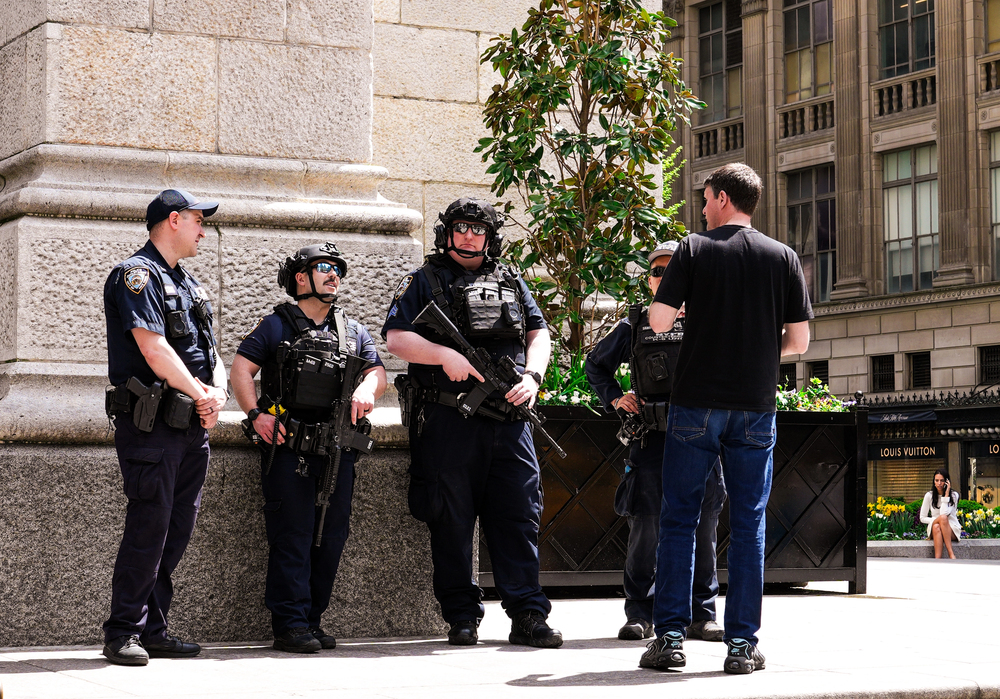
Long guns such as shotguns or rifles are rarely carried by armed security guards in public-facing roles. Their size and visibility make them unsuitable for most security environments. However, they may be used in specialized assignments such as facility protection in restricted areas or high-risk sites.
When long guns are deployed, they are typically stored securely and accessed only under specific conditions. Their use is governed by strict protocols and supervisory oversight.
- Public Safety Considerations
The primary reason long guns are uncommon is public safety. In crowded or urban environments, pistols provide sufficient defensive capability without the heightened risk associated with larger firearms. This reinforces why discussions about what guns do armed security use tend to focus on handguns rather than long guns.
Holsters, Retention, and Safe Carry Practices
Firearms do not operate in isolation. Holsters and retention systems are a critical part of armed security equipment. Professional-grade holsters are designed to prevent unauthorized access while allowing quick deployment when necessary.
Retention levels are selected based on assignment risk. High-contact roles require higher retention to prevent firearm grabs. This equipment choice reinforces that security firearms are defensive tools, not symbols of force.
Training as the Foundation of Responsible Use
- Initial Certification
Every armed security guard must complete firearm training and certification before carrying a weapon on duty. This training covers safe handling, legal use of force, situational awareness, and decision-making under pressure.
Certification is not a one-time event. Guards are required to requalify periodically to demonstrate continued proficiency.
- Ongoing Skill Development
Professional security companies invest in ongoing training to make sure that guards remain competent and confident. This includes scenario-based exercises, legal updates, and marksmanship practice. Training reinforces when not to use a firearm, which is just as important as knowing how to use one.
Risk Management and Use of Force Policies
Firearms are only one component of a broader risk management strategy. Armed security guards operate under clear use-of-force policies that emphasize de-escalation whenever possible. The firearm is a last-resort defensive tool.
Understanding what guns do armed security use also means recognizing that equipment selection is guided by restraint and responsibility. Guards are trained to assess threats, protect life, and avoid unnecessary escalation.
Public Perception and Professional Standards
The presence of firearms in security roles can influence public perception. Professional appearance, disciplined conduct, and appropriate equipment choices help maintain trust. Firearms that are common, regulated, and professionally maintained support this goal.
Security organizations avoid novelty or unconventional weapons. Instead, they rely on proven platforms that reflect industry standards and regulatory approval.
Insurance and Liability Factors
Insurance providers often influence firearm selection. Certain firearms and calibers are more readily insured due to their widespread use and established safety records. This practical consideration further narrows the range of firearms used by armed security guards.
Liability concerns also reinforce the importance of training, documentation, and compliance. Firearms are carried to protect, not to intimidate.
Technology and Modern Firearm Features
Modern firearms used by security guards often include safety and reliability enhancements. These features support safe carry and consistent performance. While technology evolves, the core requirements remain the same: reliability, control, and suitability for defensive use.
Security companies evaluate new equipment carefully, ensuring it meets legal and operational standards before adoption.
Why Standardization Matters
Standardizing firearms across a security team simplifies training, maintenance, and oversight. Guards can support one another more effectively when equipment is consistent. Supervisors can also ensure compliance and readiness more efficiently.
Standardization is another reason why the range of firearms used by armed security guards is relatively narrow and conservative.
Firearm Selection Rooted in Responsibility and Purpose
Armed security guards rely on firearms that balance legal compliance, defensive capability, and public safety, with semi-automatic pistols being the most common choice due to their versatility and reliability. The key takeaway is that firearm selection is driven by mission requirements and professional standards rather than personal preference.
At Personal Protection Solutions, we approach armed security with a responsibility-first mindset. We offer private security services that prioritize training, compliance, and measured decision-making.
Our team understands that effective protection is about preparation and judgment, not just equipment, and we bring that philosophy to every assignment we serve. Contact us today to discuss a customized security plan that matches your risk profile and protection needs.